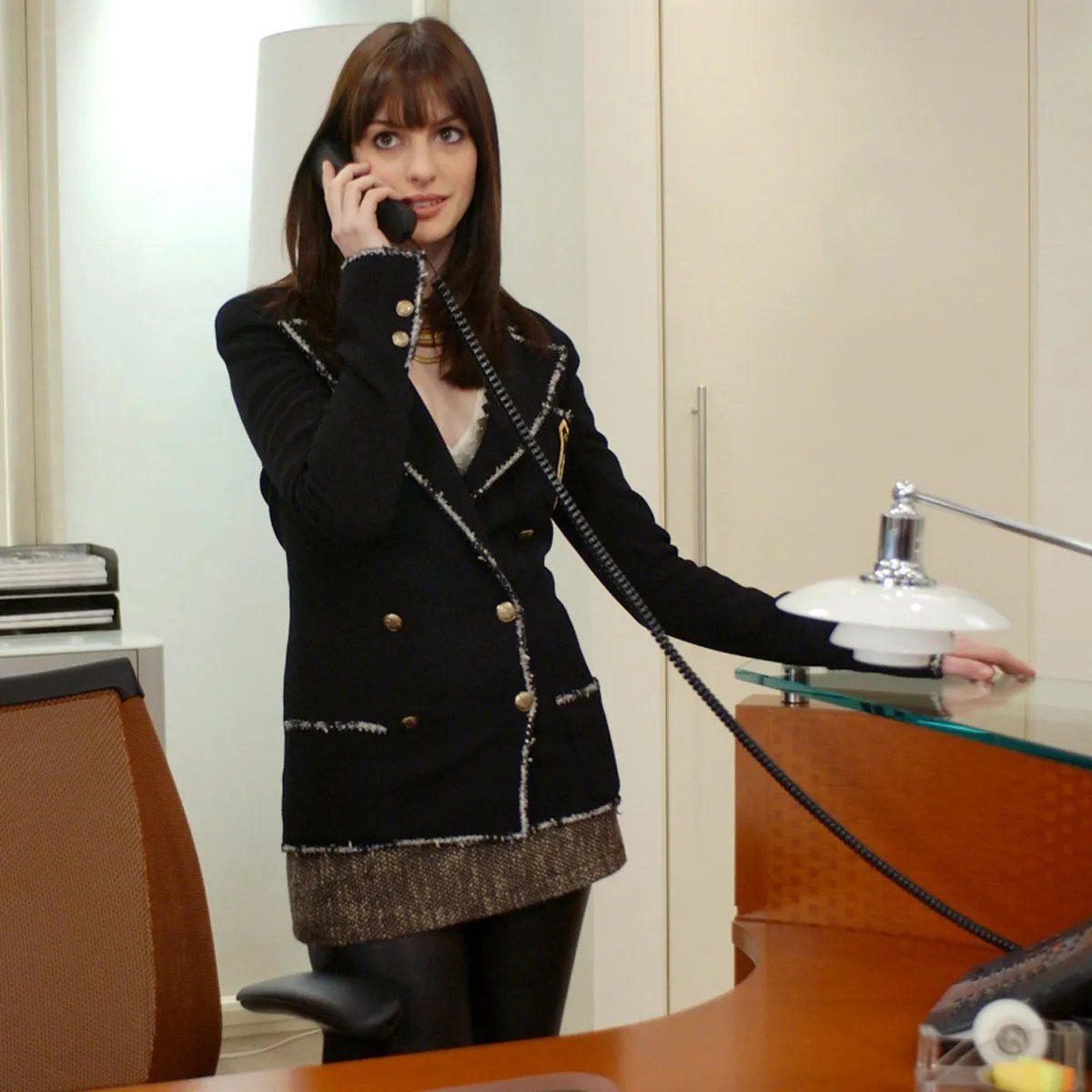
In the high-stakes, high-fashion world of Runway magazine, few stories have captivated audiences quite like Andrea Sachs’s meteoric (and often hilarious) rise from unassuming journalist to sophisticated fashionista. But her transformation in The Devil Wears Prada isn't just a tale of personal growth; it's a masterclass in how carefully chosen soundtrack and fashion from 'The Devil Wears Prada' doesn't merely accompany the narrative—it drives it, reflecting every nuance of Andy's struggle, adaptation, and eventual self-discovery. This film isn't just about clothes; it’s about the silent language of style and sound defining identity.
At a Glance: Decoding Andy's Runway Evolution
- Music as a Mirror: Discover how 21 distinct songs—from pop anthems to indie tracks—precisely punctuate Andy's emotional journey, highlighting her initial discomfort, burgeoning confidence, and ultimate disillusionment.
- Fashion as a Narrative Arc: Unpack Andy's iconic style evolution, from her initial "lumpy blue sweater" to designer chic, and how each sartorial choice reflects her professional ascent and personal compromises.
- The Unspoken Dialogue: See how the interplay between soundtrack and fashion creates a powerful, non-verbal dialogue that underscores Andy's internal conflicts and external triumphs.
- Beyond the Gloss: Understand the deeper themes of identity, integrity, and the allure of aspiration that these elements help to convey.
- A Lasting Legacy: Explore why The Devil Wears Prada remains a cultural touchstone, with its fashion and music choices resonating years later.
The Ordinary Becoming Extraordinary: Andy’s Unlikely Entry into High Fashion
When Andrea "Andy" Sachs (Anne Hathaway) stumbles into the cutthroat world of Runway magazine, she's an aspiring journalist with dreams of serious reporting, not haute couture. Her initial wardrobe—practical, comfortable, and utterly devoid of fashion-forward thinking—is a visual shorthand for her outsider status. She’s navigating a universe governed by Miranda Priestly (Meryl Streep), the glacial editor-in-chief, where every hemline and handbag is a statement. This stark contrast between Andy's world and Runway's establishes the central tension of the film, immediately setting the stage for a transformation that is both thrilling and profoundly unsettling.
The Sound of the Everyday: Before Runway's Roar
The film’s opening sets the scene with a perfect acoustic and visual juxtaposition. As Andy and other women prepare for their day, "Suddenly I See" by KT Tunstall (0:01) plays. It’s a bright, optimistic track about finding beauty and potential in everyday life, perfectly capturing Andy’s initial hopeful naiveté. She's just another hopeful young woman in New York, getting ready for a job interview she barely understands the gravity of. The song’s buoyant energy underscores her initial, uncomplicated perspective, unaware of the sartorial battlefield she's about to enter.
Andy's early interactions with her friends—Nate, Lily, and Doug—are underscored by more grounded, relatable tunes. When she recounts her new job, the mellow, introspective "How Come" by Ray LaMontagne (0:09) subtly hints at the looming shift in her life, suggesting a question about her path. It's the sound of comfort, of familiar relationships that will soon be tested.
These initial musical choices serve as a sonic baseline, representing the authentic, pre-Runway Andy. They are the sounds of her real life, a stark contrast to the demanding, high-energy soundtrack that soon dominates her professional existence.
The Clash of Worlds: Music and the Morning Grind
Andy's rude awakening to Miranda’s world is immediate and cacophonous. Emily Charlton (Emily Blunt), Miranda’s harried senior assistant, embodies the frenetic pace. When Emily calls Andy early to demand coffee, the iconic "Jump" by Madonna (0:11) kicks in. This isn't just any pop song; it's an anthem of ambition, of taking a leap, but here, it’s infused with the frantic, almost desperate energy of the Runway office. It sets the tone for Andy’s relentless new reality: a constant, high-pressure sprint. The upbeat tempo, in this context, feels less like exhilaration and more like forced propulsion, a symbol of the superficial, yet intensely driven, environment.
The early scenes also sprinkle in more ambient, yet telling, tracks. When Nigel (Stanley Tucci) delivers his famously scathing, yet ultimately kind, assessment of Andy’s lunch choices at the canteen, the playful "Tres Tres Chic" by Mocean Worker (0:18) adds a light, ironic touch to the fashion world's relentless judgment. It’s a musical wink that highlights the seemingly trivial details that hold immense weight in this industry. Andy’s complaints about Miranda to Nate at their apartment are accompanied by "Time Will Tell" by The Good Listeners (0:23), a more subdued track that again reinforces her longing for understanding and the growing divide between her personal and professional lives.
From Frumpy to Fabulous: The Fashion Transformation Begins
Andy’s initial wardrobe is a sartorial disaster in the eyes of Runway. She’s seen in chunky sweaters, sensible shoes, and practical skirts, oblivious to the unspoken rules of the fashion elite. Nigel, with his sharp wit and genuine concern, becomes her unlikely mentor, famously declaring, "You have no style or sense of fashion... it's pathetic." His intervention is the catalyst for change, not just in her closet, but in her perception of herself and her job.
The pivotal moment, the true turning point, is the montage. After acquiring a pristine Chanel jacket and heels, Andy arrives at Nate's restaurant, signaling the beginning of her sartorial rebirth. This is where "Vogue" by Madonna (0:35) takes center stage, and it’s no accident. This song, a declaration of fashion as an art form and a lifestyle, perfectly soundtracks Andy's rapid transformation. We see a dizzying sequence of high-fashion outfits: chic dresses, sleek coats, designer bags, and statement accessories. This montage isn't just about clothes; it's about confidence blooming. Each outfit, from the classic trench coat to the sophisticated cocktail dress, is a carefully curated piece of armor, allowing Andy to navigate the Runway world with new authority. Miranda, famously unimpressed by anything less than perfection, gives Andy a subtle, approving nod—the highest form of praise.
This transformation is more than superficial. It impacts Andy's posture, her gait, her expression. She carries herself differently. The fashion becomes an extension of her growing competence and her willingness to play the game. She's adapting, but at what cost? While distributing gifts to her friends at the restaurant, the melancholic "I Don't Love Anyone" by Belle and Sebastian (0:36) plays, subtly hinting at the emotional distance her transformation is creating.
The Allure of the Industry: New Connections, New Conflicts
As Andy's fashion sense evolves, so does her access to the Runway world's inner circle. She meets influential figures, like designer James Holt. At a party, his compliment on her bag – which he designed – is a small, yet significant, validation of her new style. This encounter, set to the sultry tones of "Our Remains" by Bitter:Sweet (0:38), underscores the seductive power of the fashion world, drawing Andy deeper into its orbit. The sophisticated, slightly enigmatic vibe of the song mirrors the glamorous, sometimes shadowy, world she's now inhabiting.
Later, at the same party, James Holt orders Andy a glass of punch, a seemingly innocuous act that leads to her meeting Christian Thompson, a charming and influential writer. Their discussion, framed by the groovy, upbeat "Seven Days in Sunny June" by Jamiroquai (0:40), introduces a new romantic tension and further blurs the lines between Andy's personal and professional life. The music here reflects the intoxicating energy of these high-society events, pulling Andy further away from her simple, grounded past.
The Personal Toll: When Professional Gains Cost Private Losses
As Andy excels at Runway, her personal relationships begin to fray. Her dedication to Miranda's impossible demands consumes her, leaving little time or energy for Nate, Lily, and Doug. The film poignantly captures this sacrifice through both narrative beats and specific song choices.
Nate's frustration reaches a peak when he celebrates Andy’s supposed resignation, only to find her still working on Miranda’s twins' elaborate science project. The song that follows, "Every Angel" by The Push Stars (0:51), carries a wistful, almost mournful quality, perfectly capturing the quiet heartbreak of a relationship strained to its breaking point. It’s the sound of missed connections and growing resentment.
During an Urban Jungle photo shoot, Andy confesses her personal struggles to Nigel. "Crazy" by Alanis Morissette (0:53) plays, a track known for its raw emotion and questioning of sanity. Here, it resonates with Andy's increasing feeling of being overwhelmed and out of control in her personal life, despite her professional success. The song acts as an emotional release, a moment of vulnerability amid the glamorous chaos.
The Charity Benefit: A Symphony of Status
The charity benefit scene is a microcosm of the Runway world: glittering, superficial, and intensely hierarchical. Andy, now fully integrated into the fashion ecosystem, arrives, commenting on Emily’s dangerously thin appearance, a subtle nod to the extreme pressures of the industry. The sequence is a medley of sophisticated, electronic tracks that underscore the event's high-status glamour.
"Here I Am (Kaskade Remix)" by David Morales (0:57) provides a pulsing, energetic backdrop as guests arrive, setting a mood of exclusivity and high-octane social interaction. This transitions into "Feelin' Hypnotized (Black Liquid Remix)" by DJ Colette (0:58), a more seductive, rhythmic track playing as Miranda greets Jacqueline Follet, the powerful editor of French Runway. The choice of these remixes reinforces the ultra-modern, cutting-edge vibe of the fashion world.
Finally, as Miranda sweeps through the room, greeting a parade of important guests, "Beautiful" by Moby (0:59) plays. This track, with its ethereal yet grand feel, perfectly frames Miranda’s untouchable persona. Emily and Andy discreetly remind Miranda of names, a subtle yet crucial detail that highlights their subservient, almost invisible, roles despite their proximity to power. The beauty of the song contrasts sharply with the cold, transactional nature of Miranda's interactions.
The Paris Dilemma: Choices and Consequences
The decision to send Andy to Paris instead of Emily is a crushing blow, exposing the brutal realities of Miranda’s world. The quiet, reflective "Sleep" by Azure Ray (1:04) plays after Miranda delivers the news. This melancholic song captures the profound sadness and moral conflict Andy feels. It's a moment of reckoning, where the cost of her ambition becomes starkly clear, leaving her with a heavy conscience.
The trip to Paris is initially framed by "City Of Blinding Lights" by U2 (1:14) as Andy and Miranda drive through the illuminated streets. The anthemic, soaring quality of the song reflects the grandeur and allure of Paris, the fashion capital, almost like a siren call to Andy's ambition. It’s a moment of both excitement and potential, setting the stage for her final professional test. Later, as Miranda navigates the post-show press and designers, the funky, assertive "Yeah Yeah Brother" by Black Grape (1:15) captures the confident, almost dismissive attitude Miranda wields over the industry.
Meanwhile, back home, Andy's growing disconnect from her friends continues. At Lily's photography exhibition, "Bittersweet Faith" by Bitter:Sweet (1:10) plays as Christian Thompson flirts with Andy, kissing her cheek. The song’s title itself speaks volumes about Andy’s journey—bitter sacrifices for sweet professional gains. As Andy talks with Doug and Lily, the more upbeat "Dance Floor" by The Tao of Groove (1:12) provides a fleeting sense of normalcy, but it’s short-lived. The confrontation with Lily, where she expresses her profound disappointment and lack of understanding, is punctuated by the Latin-infused "Vato Loco" by Latin Soul Syndicate (1:14). The vibrant, almost chaotic energy of the song mirrors the intensity of their argument, highlighting the irreparable damage to their friendship.
In Paris, Andy and Christian’s dinner, a moment of potential escape and intimacy, is set to the gentle, romantic "Les Yeux Ouverts (Dream a Little Dream)" by The Beautiful South (1:22). This classic, dreamy tune evokes a sense of possibility and softness, a brief respite from the harsh realities of Miranda’s world, allowing Andy a glimpse of a different future.
The Transformation's Culmination: Beyond the Wardrobe
Andy's journey with fashion isn't just about wearing expensive clothes; it���s about understanding their power, both to transform and to conform. Her final act of defiance—tossing her phone into a Parisian fountain—is not just a rejection of Miranda, but a rejection of the person she became while chasing Runway's approval.
The beauty of The Devil Wears Prada lies in its ability to show, not tell, this complex evolution. The music acts as an emotional guide, highlighting shifts in mood, character dynamics, and internal struggles. The fashion, meanwhile, provides a visceral, visual narrative, mirroring Andy’s gradual integration, her growing confidence, and ultimately, her realization that true style comes from within, not from a label.
You can delve deeper into the nuanced portrayals and the story's intricate layers, experiencing the journey firsthand. The Devil Wears Prada free movie offers an opportunity to re-watch and appreciate how every fashion choice and musical note contributes to this compelling narrative.
The Enduring Legacy: Why This Story Still Resonates
Decades after its release, The Devil Wears Prada remains a cultural touchstone. Its impact stems not just from its witty dialogue or iconic performances, but from how seamlessly it integrates aesthetic elements—soundtrack and fashion—to tell a universal story about ambition, integrity, and self-discovery.
The film taught us that fashion isn't frivolous; it's a language, a tool, and often, a mirror. And the soundtrack isn't mere background noise; it's a heartbeat, a whisper, and sometimes, a scream that guides us through Andrea Sachs's unforgettable transformation. It's a reminder that sometimes, to find yourself, you first have to get gloriously, fashionably lost.