Few films capture the zeitgeist of an industry, the trials of ambition, and the subtle dance of power quite like The Devil Wears Prada. More than a decade and a half after its release, this iconic movie continues to resonate, not just for its unforgettable fashion or sharp wit, but for its deeply human story. From its stellar Cast to its compelling Plot Summary, and the fascinating Behind-the-Scenes anecdotes, the film offers a masterclass in cinematic storytelling and cultural impact.
Whether you're a fashion enthusiast, a film buff, or someone simply navigating the complexities of a demanding career, understanding the layers of The Devil Wears Prada reveals why it remains a cherished touchstone. It's a reminder that beneath the glossy surface of high fashion lies a world of ambition, compromise, and unexpected self-discovery.
At a Glance: What You'll Discover About The Devil Wears Prada
- The Unforgettable Cast: Meet the brilliant actors who brought Miranda Priestly, Andy Sachs, Emily Charlton, Nigel, and Nate to life, and why their performances are considered legendary.
- The Full Story Unpacked: A comprehensive walkthrough of the film's compelling narrative, from Andy's wide-eyed beginnings to her pivotal choices in Paris.
- Beyond the Runway: Delve into the fascinating real-world inspirations, costume design marvels, and surprising on-set moments that shaped the movie.
- A Cultural Phenomenon: Understand why the film's themes of ambition, power, and personal ethics continue to resonate deeply with audiences today.
- The Enduring Legacy: Explore the lasting impact of The Devil Wears Prada on film, fashion, and conversations around workplace dynamics.
The Icon Makers: A Deeper Look at the Cast of The Devil Wears Prada
The brilliance of The Devil Wears Prada lies not just in its script but in the impeccable casting that brought its vivid characters to life. Each actor delivered a performance so memorable, it's hard to imagine anyone else in their roles. They weren't just portraying characters; they were crafting archetypes that continue to influence pop culture.
Meryl Streep as Miranda Priestly: The Arctic Empress
Could anyone else have played Miranda Priestly? Meryl Streep's portrayal of the formidable editor-in-chief of Runway magazine is nothing short of iconic. Miranda is a woman of immense power, terrifyingly calm demeanor, and an almost psychic ability to discern quality (or lack thereof). Streep didn't just play a boss; she embodied an entire philosophy of merciless excellence.
Her performance is a masterclass in subtle menace and controlled power. Streep reportedly drew inspiration from various formidable figures, including Clint Eastwood and even a bit of her own childhood. She avoided making Miranda a caricature, instead infusing her with a quiet dignity and moments of unexpected vulnerability, particularly regarding her personal life and professional survival. Her voice, a hushed, almost whispered tone, makes every word she utters carry immense weight, often leaving her assistants quaking in their designer boots. The nuances in Streep's performance – from a dismissive glance to a barely perceptible nod – speak volumes, proving that true power doesn't need to shout. It's no surprise she earned an Academy Award nomination for this role.
Anne Hathaway as Andrea "Andy" Sachs: The Relatable Everywoman
Anne Hathaway brilliantly anchors the film as Andrea "Andy" Sachs, the aspiring journalist fresh out of Northwestern University, utterly bewildered by the cutthroat world of high fashion. Hathaway perfectly captures Andy's initial awkwardness, her gradual transformation, and her eventual moral dilemma.
Andy's journey from a frumpy outsider to a polished, competent, albeit conflicted, fashion insider is the emotional core of the film. Hathaway portrays her evolution with a nuanced blend of exasperation, determination, and growing self-doubt. You root for Andy, you cringe for her, and you understand her struggles to balance personal values with professional ambition. Hathaway's expressive eyes convey Andy's internal world, from her shock at Miranda's demands to her dawning realization of the cost of her success. She makes Andy relatable, the audience's surrogate in the dizzying realm of Runway.
Emily Blunt as Emily Charlton: The Scathing Senior Assistant
Emily Blunt steals every scene she's in as Emily Charlton, Miranda's senior assistant. Her character is a sharp-tongued, perpetually stressed, and fiercely loyal gatekeeper to Miranda. Blunt's delivery of her biting one-liners and exquisite facial expressions are pure comedic gold.
Emily is the epitome of a fashion victim and a dedicated (if often exasperated) professional. Blunt portrays her with a perfect blend of high-strung intensity, desperate ambition, and a surprising undercurrent of vulnerability. Her rigid adherence to Runway's unspoken rules and her terror of Miranda are palpable, making her eventual downfall due to illness a moment of genuine pathos, despite her earlier haughtiness. Blunt's performance launched her into a new echelon of Hollywood recognition, proving her knack for scene-stealing supporting roles.
Stanley Tucci as Nigel: The Wise Confidant
Stanley Tucci shines as Nigel, Runway's art director and Andy's confidant and mentor. Nigel is the flamboyant, deeply knowledgeable, and surprisingly warm presence in Andy's tumultuous journey. Tucci brings a sophisticated charm and genuine warmth to the role.
Nigel acts as Andy's guide through the bewildering world of fashion, offering tough love and practical advice, always with a stylish flair. His deep passion for fashion is infectious, and his character provides much-needed emotional support for Andy, even as he's caught in Miranda's orbit himself. Tucci masterfully balances Nigel's flamboyant exterior with his sincere and professional core, making his character one of the most beloved and, ultimately, one of the most tragic figures in the film due to Miranda's final maneuver. His performance provides a grounding presence amidst the chaos.
Adrian Grenier as Nate Cooper: The Moral Compass
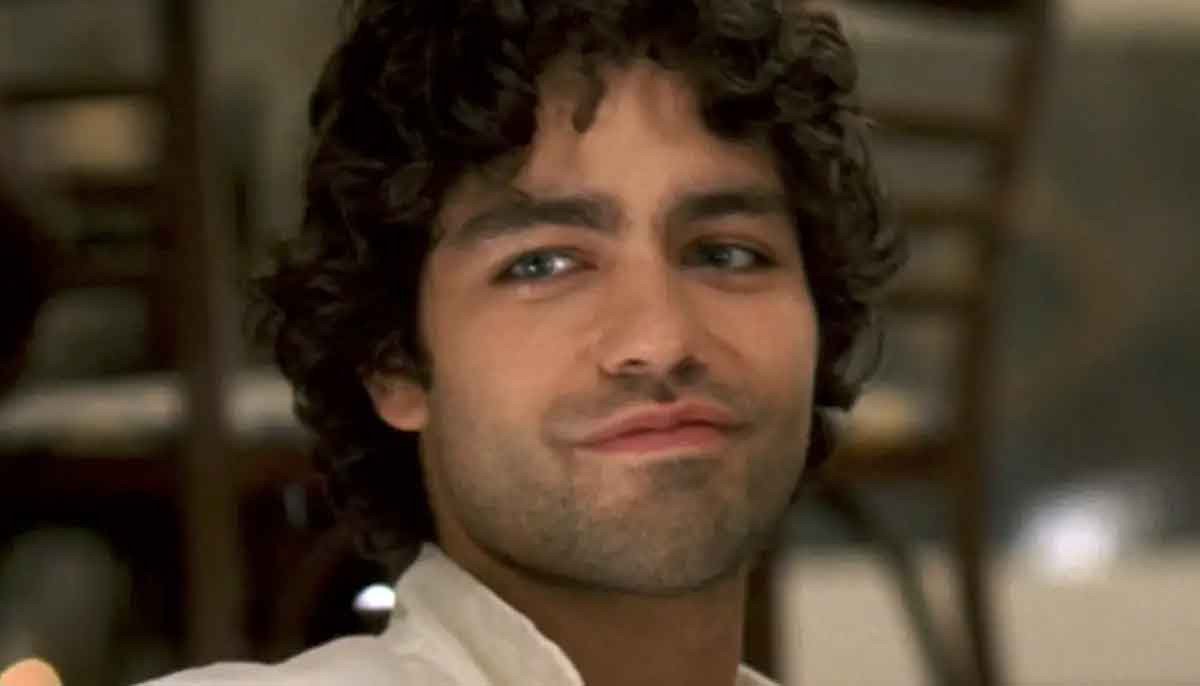
Adrian Grenier plays Nate Cooper, Andy's supportive but increasingly frustrated chef boyfriend. Nate represents Andy's life before Runway �� her true north, her moral compass.
Grenier portrays Nate as a good-hearted, down-to-earth guy who struggles to understand and accept Andy's transformation. His character embodies the challenge of maintaining personal relationships when a demanding career takes over. Nate's increasing alienation from Andy, his hurt, and his eventual ultimatum are central to the film's exploration of work-life balance and personal sacrifice. While often seen as the "villain" by some fans who identify with Andy's career drive, Nate's reactions are realistically grounded in the pain of seeing a loved one change in ways that push them apart.
The Story Unfurled: A Deep Dive into the Plot of The Devil Wears Prada
At its heart, The Devil Wears Prada is a modern fairy tale, or perhaps a cautionary one, about an innocent thrown into a glamorous, yet brutal, new world. The film meticulously charts Andy Sachs's transformation and the high cost of ambition.
A New World: Andy's Arrival at Runway
The story begins with Andrea "Andy" Sachs, a recent Northwestern University graduate. She's smart, earnest, and dreams of becoming a serious journalist. With no interest in fashion and a distinct lack of style, Andy finds herself interviewing for a job that seems entirely out of place: junior personal assistant to Miranda Priestly, the legendary, fearsome editor-in-chief of Runway magazine, a publication that dictates global fashion trends. Despite her perceived unsuitability, Miranda, surprisingly, hires her, seeing something in Andy's resume that stands out.
Andy's first days are a blur of impossible demands, constant criticism, and the relentless pursuit of perfection expected by Miranda. She struggles with the sheer volume of tasks, the expectation to anticipate Miranda's every whim, and the disdain of her senior colleague, Emily Charlton. The "clackers," Miranda's endless parade of stiletto-clad assistants, represent a culture Andy finds baffling and superficial. She quickly learns that in Miranda's world, "a million girls would kill for this job."
The Makeover Montage: Andy's Transformation
Desperate to succeed and tired of Miranda's thinly veiled contempt, Andy confides in Nigel, Runway's art director. Nigel, with his sharp eye and deeper understanding of the fashion world, becomes her mentor, helping her understand the importance of fitting in – and ultimately, excelling. He explains that fashion is not just frivolous; it's an art form, a multi-billion dollar industry.
Under Nigel's guidance, Andy undergoes a dramatic physical transformation. Gone are her sensible sweaters and ill-fitting skirts, replaced by stunning designer outfits, chic haircuts, and a newfound confidence. She starts to anticipate Miranda's needs, becoming incredibly efficient and even indispensable. This professional ascendancy, however, comes at a significant personal cost. Her dedication to Miranda's unpredictable schedule and impossible demands strains her relationships with her boyfriend, Nate, and her friends, who feel increasingly neglected and alienated by her new lifestyle and values.
Paris and the Precipice: A Game of Thrones
A pivotal moment arrives when Emily Charlton, who has diligently worked towards attending Paris Fashion Week with Miranda, falls ill after a car accident Andy helps her avoid. Miranda, without a moment's hesitation, informs Andy that she will be replacing Emily on the prestigious trip. This decision, while a huge professional step for Andy, is a brutal betrayal of Emily, highlighting the ruthlessness required to survive in Miranda's world.
In Paris, the stakes grow even higher. Andy meets Christian Thompson, a charming writer who hints at an impending shake-up at Runway. She also learns that Miranda's husband has filed for divorce, adding a layer of personal vulnerability to Miranda's formidable exterior. Andy witnesses Miranda's profound sadness and isolation, seeing a side of her boss she never expected. Simultaneously, she discovers a clandestine plot by Runway's publishing house to replace Miranda with Jacqueline Follet, a rival editor, during a highly public fashion event. The plan also involves promoting Nigel to a dream job as creative director for James Holt, a rising designer, a position Miranda herself helped secure for him.
Andy, feeling a surprising loyalty, attempts to warn Miranda. Miranda, however, reveals she was already aware of the plot. In a stunning display of strategic ruthlessness, Miranda orchestrates a counter-move, sacrificing Nigel's opportunity by having Jacqueline appointed as creative director, thereby securing her own position at Runway. Miranda coldly justifies her actions, telling Andy that her own choice to take Emily's place in Paris was a similar, albeit smaller, compromise. It's a harsh lesson in the true nature of power and survival.
The Reckoning: Andy's Choice
Deeply disillusioned by Miranda's Machiavellian tactics and disgusted by her own compromises, Andy realizes the price of her professional success has become too high. As Miranda drives away from the fashion show, Andy makes a spontaneous, symbolic decision: she throws her two-way flip phone, her tether to Miranda and the Runway world, into the Fontaine de la Concorde. It's an act of profound liberation, signaling her break from a life that no longer aligns with her values.
A New Chapter and a Knowing Glance
Back in New York, Andy returns to her original dream, successfully securing a journalism job at a local newspaper. In a surprising turn, Miranda Priestly herself provides a recommendation for Andy, describing her as "the biggest disappointment" she's ever had, but then adding, with grudging respect, that if Andy doesn't take the job, the newspaper would be "idiots" – a testament to Andy's undeniable talent and growth. Andy also reconciles with Nate, who is preparing to move to Boston.
The film concludes with Andy passing Miranda's car on a busy street. They exchange a brief, subtle, knowing glance. Miranda gives a faint, almost imperceptible smile before being driven away, leaving Andy to walk forward, confidently embracing her authentic self and her future. It's a poignant ending that suggests a mutual understanding and respect, despite their divergent paths. You can Watch The Devil Wears Prada free to relive all these iconic moments and emotional beats.
Beyond the Gloss: Behind-the-Scenes Secrets and Inspirations
The magic of The Devil Wears Prada extends far beyond the screen, with a wealth of fascinating stories from its production. These behind-the-scenes insights reveal the meticulous effort, unexpected challenges, and creative genius that transformed a bestselling novel into a cinematic masterpiece.
The Book vs. The Movie: From Page to Screen
The film is, of course, based on Lauren Weisberger's 2003 novel of the same name. Weisberger herself famously worked as an assistant to Anna Wintour, the formidable editor-in-chief of American Vogue, providing the undeniable real-world inspiration for Miranda Priestly. While the novel is a darker, more cynical take on Andy's experience, the film injects more humor, heart, and a slightly more redemptive arc for its protagonist. The movie also expands on characters like Nigel and Emily, giving them more depth and memorable moments.
Fashion as a Character: The Costumes that Defined an Era
One of the most striking elements of The Devil Wears Prada is its impeccable costume design. Patricia Field, the legendary costume designer also known for Sex and the City, was tasked with dressing the cast in a way that not only reflected their characters but also told a story. With a reported budget of over $1 million, it became one of the most expensively costumed films in history.
- Andy's Transformation: Field meticulously charted Andy's sartorial evolution. Her early outfits were deliberately ill-fitting and bland, contrasting sharply with the sleek, high-fashion world around her. Her eventual wardrobe included pieces from Chanel, Prada, Hermes, and more, visually signaling her immersion and success within the Runway empire.
- Miranda's Signature Style: Miranda's wardrobe was designed to be powerful, elegant, and understated. She rarely wore bright colors, preferring a palette of blacks, grays, and deep blues, often accessorized with a statement necklace or perfectly coiffed hair. Her clothes exuded authority, designed to make her stand out without being flashy.
- Emily's Trends: Emily's costumes were all about high fashion, often pushing the envelope with trendy, occasionally impractical, pieces. Her outfits screamed "fashion victim" in the most chic way possible, reflecting her desperate desire to be part of the inner circle.
The clothing wasn't just pretty; it was integral to the storytelling, underscoring themes of identity, aspiration, and the power of presentation.
The Miranda Inspiration: Unpacking the Anna Wintour Connection
The parallels between Miranda Priestly and Anna Wintour have long been a topic of fascination. Lauren Weisberger's direct experience undoubtedly informed her novel, and the film plays into this popular perception. While neither Streep nor director David Frankel explicitly confirmed Wintour as the sole inspiration, the echoes are undeniable: the bob haircut, the imperious demeanor, the powerful influence, and the infamous demand for a Starbucks coffee "in exactly 17 minutes."
Interestingly, Anna Wintour herself attended a premiere screening of the film, reportedly dressed in Prada. She even wore sunglasses inside the theater, adding to her mystique. Her public reaction was largely positive, reportedly appreciating the humor and artistry, though she's never directly commented on the "Miranda" comparisons.
Casting Choices and Challenges: A Fortunate Turn of Events
The casting process for The Devil Wears Prada had its own twists and turns.
- Anne Hathaway's Persistence: Hathaway was reportedly not the studio's first choice for Andy; Rachel McAdams was offered the role multiple times but declined. Hathaway, a huge fan of the book, relentlessly pursued the part, even writing "Hire Me" in the sand of a zen garden for the film's producer. Her persistence paid off, proving her perfect fit for the role.
- Meryl Streep's Input: Streep was instrumental in shaping Miranda. She insisted on the character's quiet, almost whispered voice, believing it would make her more menacing and powerful than a shouting boss. She also contributed ideas like Miranda's scenes revealing her divorce, adding a crucial layer of vulnerability that wasn't as present in the book. Streep also negotiated for a higher salary, recognizing the film's potential and her value to it.
- A "Devil" of a Director: David Frankel directed the film, bringing a balance of humor and emotional depth. His ability to navigate both the comedic elements and the more dramatic personal struggles helped elevate the movie beyond a simple fashion satire.
Improvised Moments and Memorable Lines
Several iconic moments and lines were not originally in the script but were either improvised or added by the actors themselves, showcasing their creative genius:
- "Everybody wants this": Meryl Streep improvised Miranda's famous line where she explains to Andy the profound influence of fashion, even on seemingly mundane items like a lumpy blue sweater. This speech elevates Miranda from a petty tyrant to a cultural gatekeeper.
- "That's all": Miranda's dismissive "That's all," often delivered with a flick of her wrist, became a signature sign-off that Streep honed to perfection.
- Emily's Diet: Emily Blunt's character Emily Charlton's obsession with her diet ("I'm just one stomach flu away from my goal weight") was a perfect comedic touch that added to her high-strung personality.
Filming Locations: Bringing New York and Paris to Life
The film's authenticity was enhanced by extensive on-location shooting in both New York City and Paris. The bustling streets of Manhattan, the grandeur of the Runway office (reminiscent of Vogue's real-life headquarters), and the picturesque backdrops of Paris Fashion Week all contributed to the movie's luxurious and realistic feel. The scenes in Paris, in particular, offered a dazzling visual spectacle that underlined the allure of Andy's new world.
The Enduring Legacy of the Ending
The film's ending, particularly Miranda's subtle smile and knowing glance at Andy, has been a subject of much discussion among fans. Some interpret it as a moment of grudging respect, an acknowledgment of Andy's strength and principles. Others see it as Miranda recognizing a bit of herself in Andy's ruthlessness (or at least her potential for it), but also respecting Andy for choosing a different path. It's an ambiguous, powerful conclusion that allows for multiple interpretations, solidifying the film's place as a story with complex characters and lasting impact.
Why It Endures: The Film's Legacy and Themes
More than just a fashion flick, The Devil Wears Prada has cemented its place in popular culture as a relatable exploration of ambition, identity, and the price of success. Its themes resonate deeply with anyone who has ever wrestled with career choices, challenging bosses, or the struggle to maintain personal integrity in a demanding world.
The Universal Struggle for Work-Life Balance
At its core, the film brilliantly portrays the modern struggle for work-life balance. Andy's journey highlights the all-too-common dilemma of a high-pressure job consuming every aspect of one's life. It asks: How much are you willing to sacrifice for your career? Where do you draw the line between dedication and self-destruction? This resonates with countless individuals grappling with demanding careers, making the film feel timeless.
The Cost of Ambition and Ethical Compromises
The movie is a nuanced exploration of ambition. Andy initially dismisses the fashion world, but as she succeeds, she embraces it, often at the expense of her values and relationships. Miranda's character, too, embodies ambition and the ruthless decisions required to stay at the top. The film doesn't offer easy answers, instead prompting viewers to consider the ethical compromises inherent in professional advancement. It challenges the notion that career success is always a net positive, especially when it fundamentally alters who you are.
Female Power Dynamics and Mentorship (or Lack Thereof)
The Devil Wears Prada is a fascinating study of female power. Miranda Priestly is undeniably a powerful woman, a titan in her industry. However, her mentorship style is far from conventional, often bordering on abusive. The film sparks conversations about how women in positions of power treat those below them, and the complex, often competitive, dynamics that can exist in female-dominated industries. It raises questions about whether one must be "the devil" to succeed in cutthroat environments.
Fashion as a Vehicle for Storytelling
Beyond its thematic depth, the film is celebrated for its glorious depiction of high fashion. It demystified the industry for many, showcasing its artistry, influence, and sometimes its absurdity. The clothes were not just costumes; they were extensions of the characters and integral to the narrative. The film educated audiences on the power of fashion as a form of self-expression and cultural commentary, ensuring its lasting appeal among style enthusiasts.
A Cult Classic and Quote Generator
Today, The Devil Wears Prada is undeniably a cult classic. Its memorable lines ("Florals? For spring? Groundbreaking."), iconic scenes, and unforgettable characters are constantly referenced in pop culture. It has sparked countless memes, inspired fashion trends, and continues to be a staple on "best films" lists, particularly in the rom-com and dramedy genres. Its ability to entertain, provoke thought, and remain relevant after so many years is a testament to its powerful storytelling and stellar execution.
The Runway Ahead: Learning from Miranda's World
The Devil Wears Prada isn't just a movie to watch; it's a film to analyze, discuss, and learn from. It offers a mirror to our own professional lives, challenging us to consider our values, our ambitions, and the kind of person we want to be, both inside and outside the workplace.
If you've ever felt overwhelmed by a job, struggled with a demanding boss, or questioned the path your career is taking you down, Andy Sachs's story offers both comfort and a compelling narrative to reflect upon. The film reminds us that while success can be glamorous, true fulfillment often lies in staying true to ourselves. It’s a story about finding your voice, even if it means walking away from everything you thought you wanted.